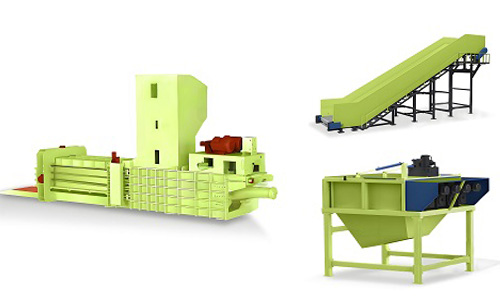
Share the latest belt conveyor, chain conveyor, feeder, garbage baler and other products and technical solutions articles.
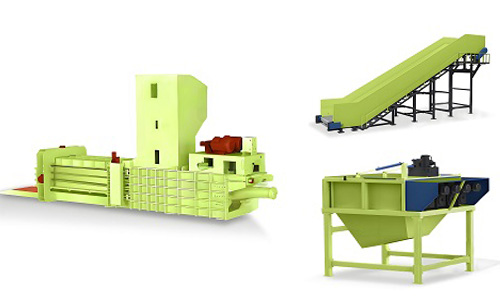
Waste balers are core equipment in the environmental protection, waste treatment, and recycling industries. They are primarily used to compress loose waste (such as household waste, plastic waste, waste paper, used clothing, and food waste) into compact bales using hydraulic or mechanical pressure. This reduces volume, facilitates storage and transportation, and simplifies subsequent recycling processes. This not only improves waste treatment efficiency but also reduces transportation costs, aligning with the principles of green environmental protection and resource regeneration. The quality of inst
allation and commissioning of waste balers directly determines the stability, safety, and baling effectiveness of the equipment. Improper installation and inadequate commissioning can easily lead to equipment malfunctions, substandard baling, and safety accidents. This article, combining the structural characteristics of waste balers (taking the most widely used hydraulic waste baler as an example) and on-site practical experience, details the installation process, key points, commissioning steps, and precautions, providing comprehensive and practical technical guidance for on-site operators to ensure the long-term safe and efficient operation of the equipment.
I. Installation Process and Key Points of Waste Balers
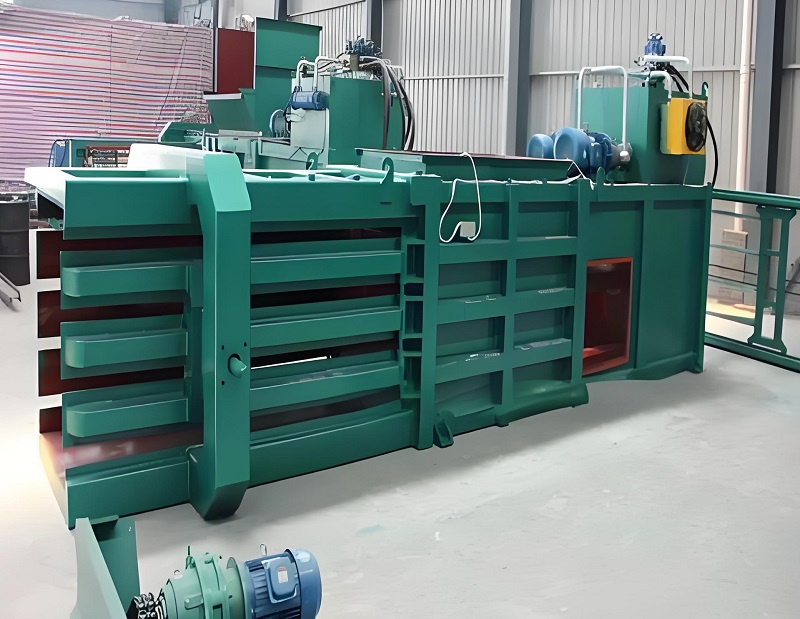
The installation of waste balers must follow the core principles of "qualified foundation, standardized assembly, safety control, and smooth connection." Based on the equipment model (vertical or horizontal), power size, and on-site working environment, the installation is carried out in four stages: preliminary preparation, foundation construction, equipment assembly, and auxiliary system installation. Details are controlled throughout the process to prevent improper operation and ensure that the installation quality meets the requirements of the equipment manual and industry standards.
1. Pre-installation Preparation
Thorough preparation before installation is crucial for ensuring a smooth installation process. The focus is on four key areas: equipment inspection, site planning, foundation preparation, and tool preparation. First, inventory and inspect the equipment components. Compare the components against the packing list, verifying the quantity, specifications, and integrity of the main unit, hydraulic system (oil tank, oil pump, hydraulic valve, hydraulic cylinder), electrical system (control cabinet, motor, sensors), baling chamber, press head, door, and conveyor belt (if applicable). Check for any damage, deformation, or corrosion caused during transportation. Ensure that seals (sealing rings, gaskets) are intact and that fasteners such as bolts, nuts, and pins are complete. If any components are missing, damaged, or defective, contact the manufacturer immediately for replacement. The use of damaged or defective components is strictly prohibited. Secondly, complete on-site planning and site preparation. Based on the equipment dimensions and operational requirements, plan a suitable installation site, ensuring the site is level and spacious, and providing sufficient operating space (at least 1.5 meters of operating distance around the equipment) for later equipment maintenance, waste feeding, and bale removal; clear debris and obstacles from the site, and level the ground to prevent uneven surfaces from affecting equipment installation accuracy; simultaneously check the site's power and water supply conditions (some hydraulic systems require cooling water), ensuring that the power supply voltage and power match the equipment requirements, the circuit layout is standardized, and the water supply pipes are unobstructed.
Finally, prepare the foundation and tools. Horizontal waste balers are large and heavy, and vibrate considerably during operation, requiring a dedicated concrete foundation. The foundation dimensions must be designed strictly according to the equipment manual, with a foundation weight of no less than 6-8 times the equipment weight. The foundation depth must be greater than the local frost depth. Before pouring, anchor bolt holes, hydraulic pipe holes, and drainage holes must be pre-reserved, ensuring accurate positioning; vertical waste balers are lighter and can be installed directly on a level, hardened surface without a separate foundation, but anti-slip and shock-absorbing mats should be laid on the ground to reduce vibration during equipment operation. Simultaneously, equip the site with specialized installation tools such as cranes, forklifts, spirit levels, torque wrenches, multimeters, screwdrivers, and wrenches. Provide professional training to installation personnel, clearly defining the installation process, safety regulations, and precautions. Only after passing the assessment can personnel begin work.
2. Foundation Construction and Main Unit Installation
Foundation construction mainly applies to horizontal waste balers; vertical balers can skip this step and proceed directly to main unit placement. High-strength concrete should be used for concrete foundation pouring. During pouring, ensure the concrete is uniform and dense, avoiding defects such as honeycomb structures, pitting, and cracks. The pouring height should be level with the equipment base, and the foundation surface flatness deviation should be controlled within 0.5 mm/m. After pouring, curing should be carried out for at least 28 days to ensure the foundation strength meets the requirements. During curing, it is strictly prohibited to stack heavy objects on the foundation or collide with the foundation to avoid foundation deformation. The main unit installation is the core of the installation process. First, the main unit is carefully lifted to the foundation or designated location using a crane. Appropriate lifting equipment must be selected, and the unit must be securely fastened to prevent shaking or falling during lifting. The lifting angle must be reasonable to prevent damage to equipment components. After the unit is in place, adjust its position to ensure that the main unit's centerline coincides with the foundation's centerline, with a deviation of no more than 2mm. For horizontal balers, the main unit base must be aligned with the foundation, anchor bolts inserted, and shims adjusted. A level is used to check the levelness of the main unit base, with a levelness deviation of ≤0.3mm/m, ensuring that the main unit is installed flat and securely. For vertical balers, the equipment must be placed on anti-slip and shock-absorbing pads, and the verticality of the equipment adjusted to prevent tilting, which could affect baling accuracy.
After the main unit position is adjusted, tighten the anchor bolts. The tightening torque must meet the requirements specified in the equipment manual to prevent bolt loosening and increased vibration during operation. Then, perform secondary grouting using high-strength cement mortar to fill the gaps between the main unit base and the foundation, ensuring no gaps or looseness. After the grouting layer hardens, recheck the tightness of the anchor bolts, remove the shims, and fill the shim gaps with cement to ensure a tight connection between the foundation and the main unit.
3. Installation of Core Components and Auxiliary Systems
a. Hydraulic System Installation: The hydraulic system is the power core of the waste baler. During installation, first clean the inside of the oil tank, oil pump, hydraulic valves, hydraulic cylinders, and other components to ensure the hydraulic system is clean and prevent impurities from entering the hydraulic pipes, which could lead to valve blockage and cylinder wear. a. Hydraulic System Installation: Secure the oil tank in the designated position, connect the oil pump to the motor, ensuring the coaxiality deviation between the motor and the oil pump is ≤0.05mm, and that the connection points are well-sealed; lay the hydraulic pipelines, ensuring the pipelines are neat and standardized, avoiding bending and twisting. Install seals at the pipeline joints and tighten the connectors to prevent hydraulic oil leakage; connect the hydraulic cylinder to the hydraulic valve, ensuring a secure connection, and install the hydraulic valve in a location convenient for later debugging and operation; fill with hydraulic oil that meets the requirements of the equipment manual, ensuring the oil level reaches the specified level. After filling, check whether the oil circuit is unobstructed and free of leaks.
b. Electrical System Installation: The electrical system is responsible for the control and operation of the equipment. During installation, first check the insulation performance of the electrical components to avoid safety hazards such as leakage and short circuits. Secure the control cabinet in a dry, well-ventilated, and easily accessible location. Connect the control cabinet to the motor, sensors, solenoid valves, and other electrical components. The circuit layout should be standardized, the wires neatly arranged, and proper insulation protection provided to prevent exposed wires; install safety components such as emergency stop buttons and limit switches. The emergency stop button should be installed in a conspicuous and easily accessible location, and the limit switches should be installed in the designated positions to ensure accurate control of the press head's lifting and lowering and the opening and closing of the doors; connect the power supply, check whether the circuit connection is correct, and whether the grounding protection is reliable, ensuring stable operation of the electrical system.
c. Other Component Installation: Install the baling chamber and the press head, ensuring a tight fit between the press head and the baling chamber, without jamming, and that the press head moves smoothly; install the doors (inlet door, outlet door), ensuring the doors open and close smoothly, are well-sealed, and that there are no gaps between the doors and the baling chamber when closed, preventing waste from overflowing during the baling process; for balers equipped with a conveyor belt, install the conveyor belt, adjust the tension of the conveyor belt, ensuring smooth operation without deviation, and that the conveyor belt connects smoothly to the inlet, facilitating waste feeding.
d. Post-Installation Inspection: After the equipment is installed, a comprehensive inspection should be carried out to ensure that all components are properly installed and securely connected. I. Inspection of the Waste Baler
Check the connections of the main unit, hydraulic system, and electrical system; check for loose bolts and nuts; check for damage or leaks in hydraulic pipes and electrical wiring; check the hydraulic oil level and quality, the insulation performance of the electrical system, and the sensitivity of safety components such as limit switches and emergency stop buttons; clean debris and oil stains from inside and around the equipment to ensure cleanliness; check the operational flexibility of components such as the baling chamber, press head, and door body, ensuring no jamming or seizing, and that all components operate normally and meet installation standards.
II. Debugging Steps and Methods for the Waste Baler
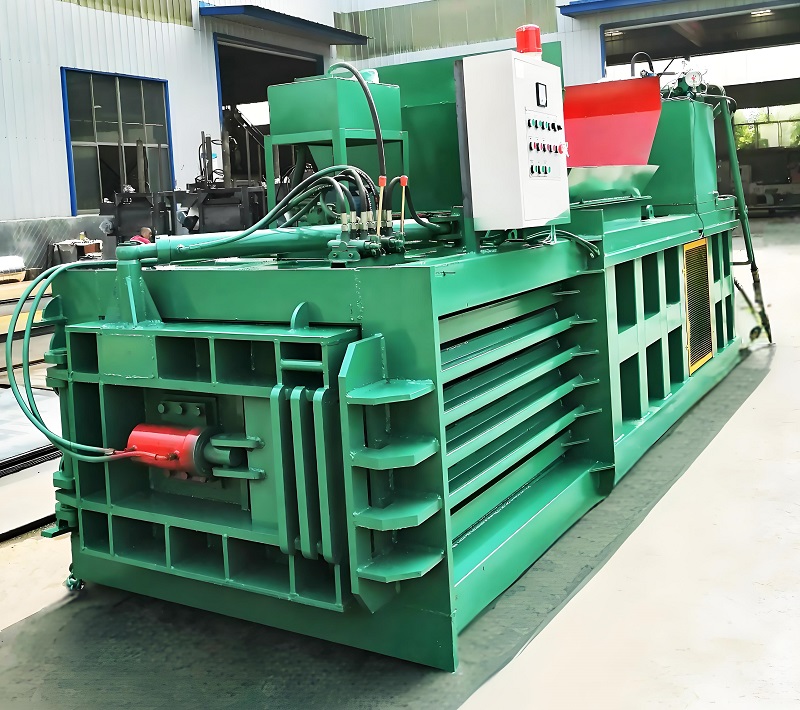
Debugging the waste baler is a crucial step in verifying installation quality, optimizing equipment performance, and ensuring effective baling. It should follow the principles of "no-load first, then load; manual first, then automatic; gradual progression and step-by-step optimization." The process is divided into three stages: no-load debugging, load debugging, and automatic operation debugging. During debugging, the equipment's operating status must be monitored in real time to promptly identify and resolve problems, ensuring that the debugging is successful before putting the equipment into formal operation.
1. No-Load Debugging (Manual Mode)
The core of no-load debugging is to check the operational flexibility and coordination of each component of the equipment, eliminating problems such as jamming and leaks. No waste material needs to be added during this stage, and the debugging time should be at least 1-2 hours. First, turn on the power and start the control cabinet. Check the operating status of the electrical system, whether the indicator lights and meters are displaying correctly, and whether the motor is running smoothly without abnormal noise or vibration; then switch to manual mode, operate the control cabinet buttons to control the lifting and lowering of the press head, and check whether the press head lifts and lowers flexibly and smoothly without jamming or abnormal noise. Check whether the limit switches can accurately control the upper and lower limits of the press head to prevent excessive lifting or lowering that could damage the equipment.
Operate the door switches to check whether the feed door and discharge door switches are flexible and the seals are good. Check whether the door can be reliably locked after closing to prevent accidental opening during operation; check the operating status of the hydraulic system, observe whether the hydraulic oil pressure is stable (the pressure value must meet the requirements of the equipment manual), whether there are leaks in the hydraulic pipes and joints, whether the oil pump and hydraulic valve are operating normally, and whether the oil temperature is controlled between 30-60℃. If the oil temperature is too high, check the operation of the cooling system (if any) and troubleshoot the problem promptly. For baling machines equipped with a conveyor belt, start the conveyor belt and check if it runs smoothly without deviation or slippage, and whether the conveyor speed is uniform and connects smoothly with the feeding port. During the no-load commissioning process, if any problems such as equipment jamming, abnormal noise, or leakage are found, immediately stop the machine, cut off the power, troubleshoot and resolve the problem. After resolving the problem, restart the commissioning until all parts of the equipment are running normally without any abnormalities.
2. Load Commissioning (Manual Mode)
After the no-load commissioning is completed successfully, proceed to the load commissioning stage. The core objective is to test the baling force and baling effect of the equipment, and optimize parameters such as hydraulic pressure and press head operating speed. During the commissioning process, gradually add waste materials to avoid overloading the equipment by adding too much at once. First, according to the type of waste (such as waste paper, plastic, and household waste), initially set the hydraulic pressure, press head descent speed, and pressure holding time parameters as required by the equipment manual. The hydraulic pressure is usually set at 15-30 MPa; the specific parameters need to be adjusted based on the hardness of the waste and the required baling density.
Manually operate the feeding door, add an appropriate amount of waste material (the initial amount is 1/3 of the baling chamber volume), close and lock the feeding door, operate the control panel buttons to control the press head descent and compress the waste. Observe whether the press head descends smoothly, whether the hydraulic pressure is stable without abnormal fluctuations, and whether the equipment is running normally without overload noise. After the press head descends to the specified position, start the pressure holding program. The pressure holding time is set to 30-60 seconds to ensure that the waste is compressed and formed. During the pressure holding period, observe whether there is any leakage in the hydraulic system and whether the baled block is loose or deformed. After the pressure holding is complete, the control system raises the press head to the upper limit position, opens the discharge door, and removes the compacted bale. The density and dimensions of the bale are checked to ensure they meet the requirements. The bale density should typically be no less than 0.8-1.2 t/m³, and the dimensional deviation should be controlled within ±5 mm. The bale should be free of looseness and cracks. If the bale density is insufficient, the hydraulic pressure should be increased and the pressure holding time extended. If the bale is cracked or loose, the fit between the press head and the baling chamber should be checked, the press head operating speed adjusted, or the amount of material fed per cycle reduced. If the equipment experiences overload, abnormal pressure, or other problems, it should be stopped immediately, and the hydraulic and electrical systems should be checked for faults. After adjusting the parameters, the equipment should be re-commissioned.
The amount of material fed is gradually increased until the baling chamber is at full capacity. The above baling process is repeated, and the parameters are adjusted and optimized multiple times to ensure that the equipment operates stably at full load, the baling effect is satisfactory, and there are no overloads, leaks, or abnormal noises. The load testing time should be no less than 4-6 hours. During this time, the temperature of each component of the equipment, the tightness of the bolts, the hydraulic oil level and quality should be regularly checked, hydraulic oil should be added as needed, and residual materials inside the equipment should be cleaned to ensure normal operation.
3. Automatic Operation Debugging
After successful load testing, the automatic operation debugging phase begins. The core objective is to verify the coordination and stability of the equipment's automatic operation, ensuring that the entire process of feeding, pressing, pressure holding, and discharging can be completed in automatic mode without excessive manual intervention. First, set the automatic operation parameters on the control panel, including feeding time, press head lowering speed, hydraulic pressure, pressure holding time, press head raising time, and discharge time. The parameter settings should be based on the values optimized during load testing to ensure smooth process transitions.
Start the automatic operation mode. The equipment automatically starts the conveyor belt (if applicable), the feeding door automatically opens, and the waste material enters the baling chamber via the conveyor belt. After the set amount of material is fed, the conveyor belt stops, and the feeding door automatically closes and locks. Subsequently, the press head automatically lowers to compress the waste. After reaching the set pressure, it automatically enters the pressure holding state. After the pressure holding is complete, the press head automatically rises to the upper limit position, the discharge door automatically opens, and the compacted bale is automatically pushed out (or manually assisted). After the discharge is complete, the discharge door automatically closes, and the equipment enters the next automatic baling cycle. The automatic operation debugging lasts for 8-12 hours, during which the equipment's operating status is monitored in real time to observe whether the automatic process is smooth, whether there are any jams or malfunctions, whether the hydraulic and electrical systems are operating stably, and whether the packaging effect is consistent and free of unqualified bales. If automatic process jams or malfunctions are found, the sensitivity of the limit switches and sensors should be checked, and the automatic operation parameters should be adjusted. If the packaging effect is unsatisfactory, parameters such as hydraulic pressure and pressure holding time should be further optimized. During the debugging process, a dedicated person must be assigned to be on duty. Any abnormal situation should be immediately addressed by stopping the machine to ensure safe operation.
4. Qualification Standards for Debugging
The waste baler debugging is considered qualified if it meets the following requirements: all components of the equipment operate smoothly without jamming, abnormal noise, or leakage; the hydraulic system pressure is stable, the oil temperature is controlled within the specified range, and there is no leakage; the electrical system operates normally, the indicator lights and meters display accurately, and the safety components (emergency stop button, limit switches) are sensitive and reliable; the packaging effect is qualified, the density and size of the bales meet the requirements, and there are no loose or cracked bales; in automatic operation mode, the process is smooth without malfunctions, and continuous and stable baling can be achieved; the equipment operating noise is ≤85dB, meeting industry environmental standards.
III. Precautions for Installation and Debugging
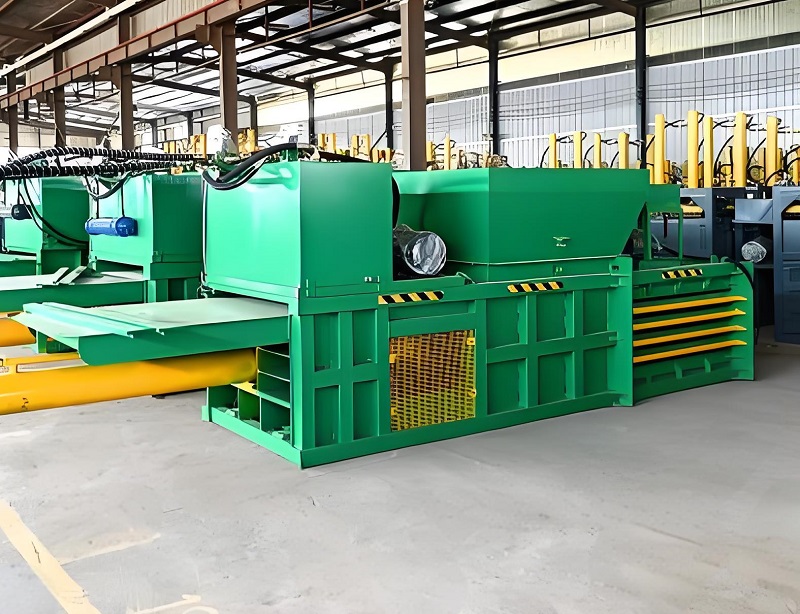
The installation and debugging of the waste baler involve multiple fields such as mechanics, hydraulics, and electrical engineering. During the operation, safety regulations and operating procedures must be strictly followed, and the following points should be paid attention to in order to avoid safety accidents and equipment failures.
Safety Operation Regulations: Installation and debugging personnel must receive professional training, be familiar with the equipment structure, operating procedures, and safety precautions, and wear appropriate safety protective equipment (safety helmet, gloves, non-slip shoes). Unauthorized operation and violations of regulations are strictly prohibited; during installation and debugging, if the equipment needs to be started, it must be confirmed that there are no personnel working around the equipment and no obstructions before starting; when stopping the machine for maintenance or troubleshooting, the power must be cut off and the hydraulic system must be shut down.
1. Valves: Release hydraulic pressure and hang "Do Not Operate, Under Maintenance" signs to prevent accidental equipment startup and resulting safety accidents.
2. Equipment Cleaning and Protection: Before installing and commissioning the hydraulic system, ensure all components are clean to prevent impurities from entering the hydraulic pipes, which could lead to valve blockage and cylinder wear; during electrical system installation, ensure proper insulation to prevent exposed or damp wires, avoiding leakage and short circuits; during equipment operation, regularly clean residual materials from the baling chamber, press head, and door to prevent material clumping and jamming, which could affect equipment operation; after commissioning, thoroughly clean the equipment, apply anti-rust oil, and protect equipment components to extend the equipment's service life.
3. Parameter Adjustment Principles: The adjustment of parameters such as hydraulic pressure, press head operating speed, and pressure holding time must follow the principle of "gradual progress and step-by-step optimization." Avoid making large adjustments to parameters at once to prevent equipment overload and damage; after parameter adjustment, perform multiple test baling cycles to verify the baling effect until the parameters are reasonable and the baling is satisfactory; different types of waste require adjustment of corresponding parameters to ensure consistent baling results.
4. Handling Abnormal Situations: During installation and commissioning, if any abnormal situations such as equipment jamming, unusual noises, leaks, or overload are found, immediately stop the machine, cut off the power, troubleshoot and resolve the problem. Do not operate the equipment with faults; if an unresolved fault occurs, contact the equipment manufacturer's technical personnel immediately. Do not disassemble or modify equipment components without authorization to avoid expanding the scope of the fault.
5. Environment and Post-Commissioning Preparation: The installation and commissioning site must be kept dry and well-ventilated to prevent damp environments from causing short circuits in the electrical system and corrosion in the hydraulic system; after successful commissioning, conduct a comprehensive inspection and cleaning of the equipment, and organize installation tools and site debris; provide equipment operation and daily maintenance training to operators, explaining equipment operating parameters, operating procedures, and safety precautions; establish equipment installation and commissioning records, documenting installation and commissioning time, parameter settings, problems encountered, and solutions, providing a reference for future equipment maintenance and parameter optimization. The installation and commissioning of a waste baler is a systematic and professional task that requires strict adherence to the installation process. Key aspects such as foundation construction and component assembly must be carefully controlled. The commissioning process should proceed step by step, including no-load, load, and automatic operation tests, optimizing equipment parameters to ensure proper installation, stable operation, and qualified baling. Simultaneously, operators must strictly follow safety operating procedures, prioritize equipment cleaning and maintenance, and promptly address any abnormal issues during installation and commissioning. Only then can the core advantages of the waste baler be fully realized, improving waste treatment efficiency, reducing transportation costs, and promoting the green and efficient development of the environmental protection industry.

 Phone: +86 187 3819 4110
 E-mail: sales@zchmachinery.com
 Address: 36 xueyuan road, Zhengzhou City, Henan Province, China.


© 2025 ZhongCheng ECO
Technical support: Beijing Century Network