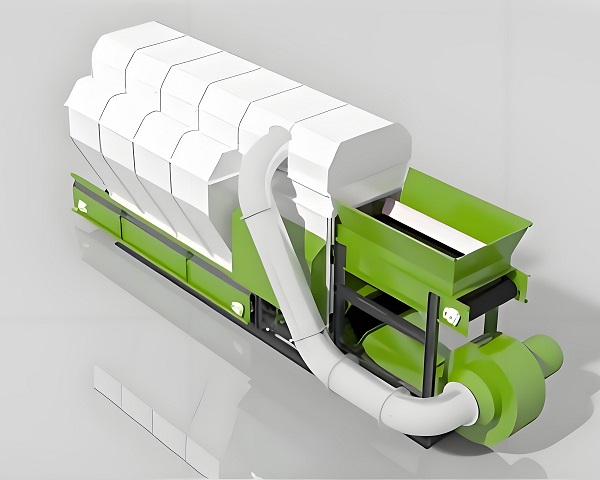
Focus on the latest trends in the field of solid waste treatment, deeply analyze the technological innovation and application of screening equipment, and share multi-scenario screening solutions, successful cases and process optimization experience.
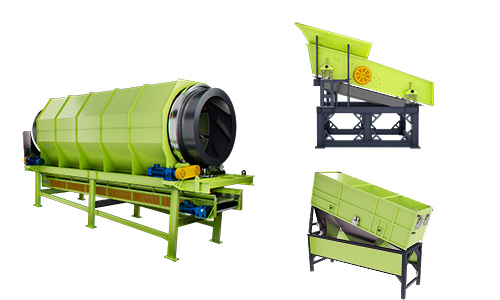
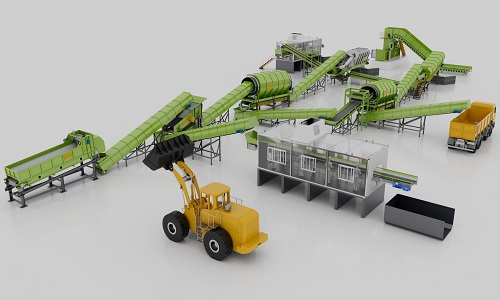
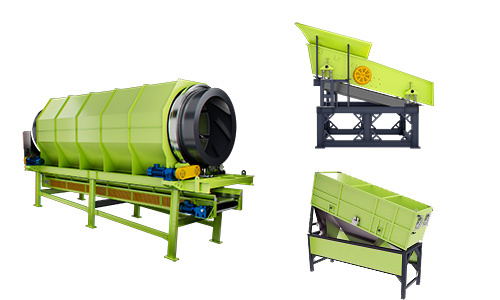
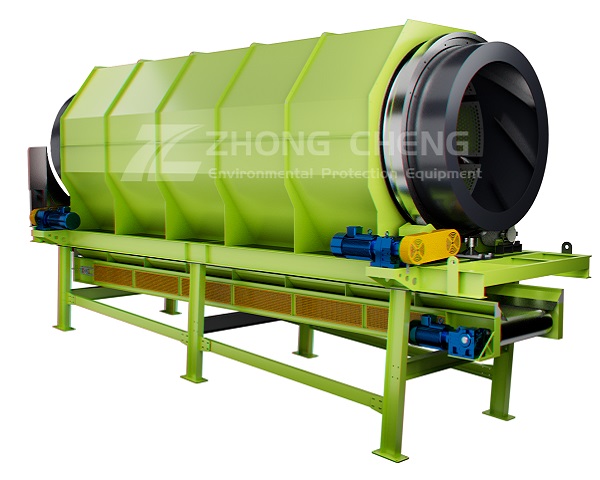
As an upgraded and improved version of traditional shaft-driven trommel screens, the shaftless trommel screen, with its unique center-shaft-free design, optimizes the screening process and is suitable for screening complex materials in various fields, including mining, sand and gravel, waste disposal, and river dredging. Compared to traditional shaft-driven trommel screens, it offers significant advantages in terms of anti-clogging, adaptability, and ease of maintenance, effectively addressing the problems of low efficiency, frequent failures, and high maintenance costs in the screening of complex materials. A thorough understanding of the advantages and characteristics of shaftless trommel screens is of great practical significance for the rational selection of screening equipment, improving production efficiency, reducing operating costs, and promoting quality and efficiency improvements in the material screening process.
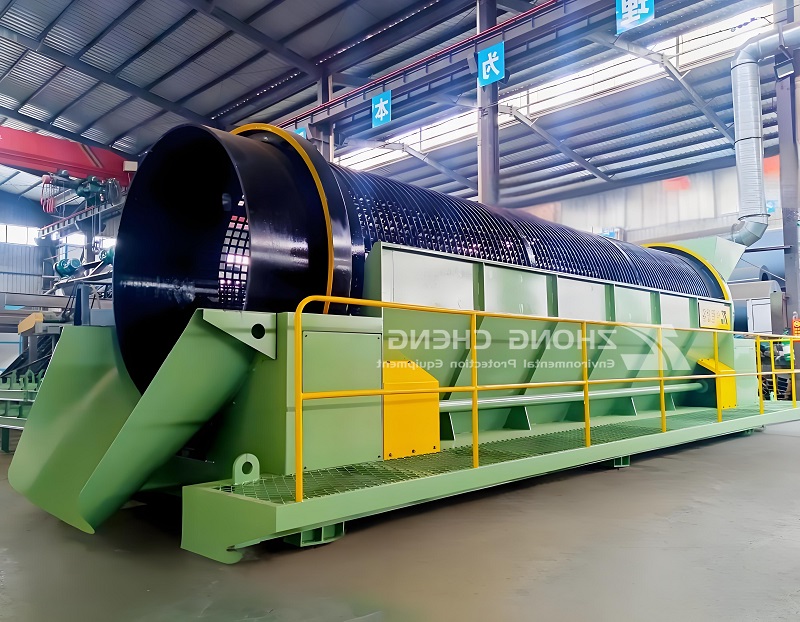
The most core feature of the shaftless trommel screen is its center-shaft-free design, which is the key difference from traditional shaft-driven trommel screens and the source of many of its advantages. Traditional shaft-driven trommel screens rely on a central shaft to drive the drum's rotation. This central shaft is easily impacted and entangled by large or fibrous materials, leading to equipment jamming and downtime. The shaftless trommel screen eliminates the central shaft, using external gears, support rollers, or chain drives to rotate the drum around its axis, structurally avoiding the numerous problems associated with a central shaft.
This shaftless structure allows for a completely unobstructed internal space within the drum, enabling materials to freely tumble and slide. This not only increases the contact area between the material and the screen mesh, improving screening efficiency, but also effectively prevents jamming and entanglement of large or fibrous materials (such as wire, fabric, and vines), significantly reducing the probability of clogging. It is particularly suitable for screening complex materials mixed with large and fibrous objects, such as aged waste, construction waste, and river silt, ensuring continuous and stable screening operations.
Outstanding anti-clogging and anti-entanglement performance is one of the most significant advantages of the shaftless trommel screen. In the screening of complex materials, wet and sticky materials, entangled materials, and large impurities are the main causes of clogging and downtime in traditional screening machines. The open internal structure design of the shaftless trommel screen, combined with the uniform rotation of the drum, allows wet and sticky materials to be separated from the screen mesh by centrifugal force, preventing adhesion and clogging. Entangled materials are thrown out by the rotation of the drum and do not wrap around the central shaft. Large materials can pass through the drum smoothly without getting stuck at the connection between the shaft and the drum, effectively reducing downtime for cleaning and improving equipment operating efficiency.
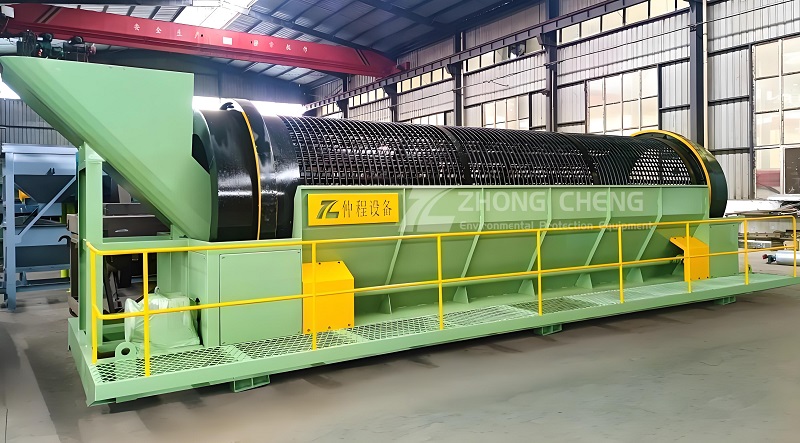
Practical experience has shown that when processing materials of similar complexity, the continuous operating time of the shaftless trommel screen is increased by more than 30% compared to traditional shafted screening machines, and the rate of clogging failures is reduced by 80%, significantly reducing manual cleaning costs and equipment failure losses. At the same time, its screen mesh adopts a detachable design, and the inside of the drum is unobstructed, making cleaning and replacing the screen mesh more convenient, further improving maintenance efficiency.
Wide adaptability and strong processing capacity are another core feature of the shaftless trommel screen. The drum diameter of the shaftless trommel screen can be flexibly designed according to processing needs, ranging from 1.2 meters to 3 meters, with a single-machine processing capacity of 10-300 tons/hour. It can meet the small-scale screening needs of small workshops and also adapt to the large-scale production needs of large and medium-sized mines and waste treatment plants. It is suitable for a wide range of materials, whether dry sand and gravel, ore, or wet and sticky sludge and aged waste; whether uniformly sized materials or complex materials mixed with large pieces and impurities, it can achieve efficient screening.
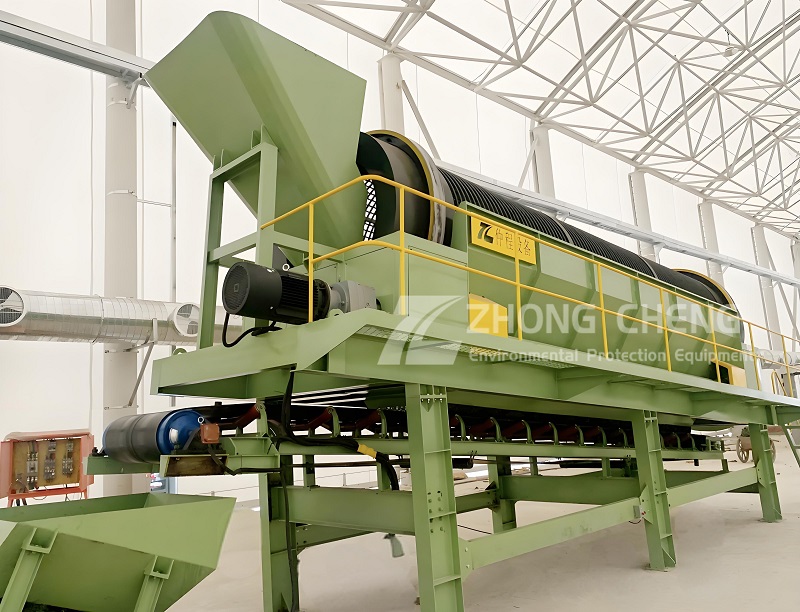
In addition, the shaftless trommel screen can be equipped with single or multi-layer screens according to grading requirements, achieving multi-stage grading of materials. The screen mesh aperture can be flexibly adjusted to adapt to different particle size screening requirements. It can be used for coarse screening and pre-screening of materials, as well as for fine grading, meeting multi-scenario and multi-specification screening needs, demonstrating extremely strong versatility.
Convenient maintenance and long service life are important aspects of the shaftless trommel screen's high cost-effectiveness. Compared to traditional shafted trommel screens, shaftless trommel screens have fewer components and a simpler structure. The drive system and transmission components are located on the outside of the drum, away from the material contact area, reducing wear and corrosion on the components and lowering the failure rate. The core component, the drum, is welded from high-strength wear-resistant steel plates, and its surface is treated with anti-corrosion and wear-resistant coatings, enabling it to withstand the impact and friction of large materials and extending the equipment's service life.
Furthermore, the absence of a central shaft makes daily inspection and maintenance more convenient. Operators can quickly check the operating status of the drum, screen mesh, and drive components, promptly clean debris, and replace wear parts without disassembling complex structures, significantly reducing maintenance difficulty and costs. Compared to traditional shafted screens, annual maintenance costs can be reduced by 25%-40%.
It offers stable operation and low energy consumption, combining practicality and economy. The shaftless trommel screen uses support rollers to rotate the drum. The large contact area between the support rollers and the drum ensures even force distribution, resulting in low vibration and noise during operation. This reduces the impact of equipment vibration on the site and surrounding environment, and also reduces wear and tear on the equipment's components, improving operational stability.
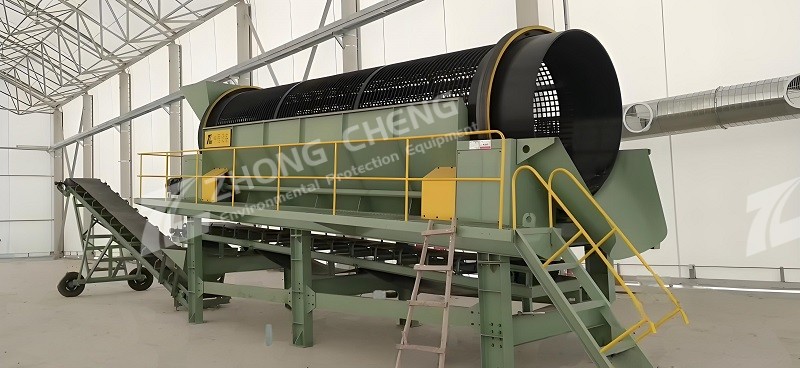
In terms of energy consumption, the shaftless structure reduces the frictional resistance of the central shaft, and the drive system does not need to drive a heavy central shaft. For the same processing capacity, its energy consumption is 15%-25% lower than traditional shafted trommel screens. Long-term operation can save a significant amount of electricity, reducing production and operating costs, and aligning with the concept of green and energy-efficient production. In addition, there is no significant dust leakage during operation, and with a dust cover, it can achieve environmentally friendly screening, meeting modern environmental protection requirements.
With the core advantage of its shaftless design, the shaftless trommel screen boasts significant features such as anti-clogging and anti-winding capabilities, wide adaptability, strong processing capacity, convenient maintenance, stable operation, and low energy consumption. It effectively compensates for the shortcomings of traditional shafted trommel screens and is suitable for various complex material screening scenarios. It not only improves screening efficiency and reduces maintenance costs but also ensures operational continuity and stability. It has broad application prospects in mining, environmental protection, construction, and other fields, becoming a preferred equipment in the modern material screening industry.

 Phone: +86 187 3819 4110
 E-mail: sales@zchmachinery.com
 Address: 36 xueyuan road, Zhengzhou City, Henan Province, China.


© 2025 ZhongCheng ECO
Technical support: Beijing Century Network